
Indian benchmark indices, Sensex and Nifty, staged a moderate rebound after a significant correction in the previous session, driven by foreign fund inflows and a largely positive trend in global markets, though geopolitical tensions between the US and Iran continued to foster caution.

Sir Garfield Sobers, who passed into the ages on July 17, would have turned 90 today, July 28. Former Pakistan captain Intikhab Alam remembers a dear friend who he believes was 'undoubtedly the greatest cricketer the world has ever seen.'

The Indian women's cricket team has secured a spot in the 2028 Los Angeles Olympic Games as the top-ranked Asian team in the ongoing T20 World Cup. The men's team will need to be the continental leaders in world rankings by the end of 2026 to qualify directly. Cricket is making its return to the Olympics after a century, featuring six teams in both men's and women's competitions, with qualification criteria unveiled by the ICC.

US Vice President J D Vance is currently in Switzerland, leading critical technical talks with Iran to advance diplomatic efforts on Iran's nuclear programme and secure a lasting ceasefire in Lebanon, following a recently signed memorandum of understanding aimed at de-escalating West Asian hostilities.

Indian benchmark indices Sensex and Nifty climbed in early trade, driven by buying in blue-chip stocks like Reliance Industries and ICICI Bank, alongside a notable cooling in crude oil prices.
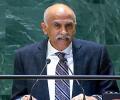
India has strongly condemned an attack on UN peacekeepers in Lebanon that resulted in the death of a Serbian Blue Helmet and injuries to two others. The nation has called for an immediate and thorough investigation to ensure accountability for the perpetrators. This incident follows a series of attacks on UNIFIL personnel amidst escalating hostilities in the region, prompting global calls for peacekeeper safety.

State-run Oil and Natural Gas Corporation (ONGC) has approved the development of a 1.75 million tonnes (mt) strategic petroleum reserve (SPR) in Mangaluru, a project deemed of national importance, with plans for broad commercial utilisation.

India U17 Women's team face Lebanon in a must-win game in the AFC U17 Women's Asian Cup, with a chance to qualify for the knockout stage for the first time.

Indian benchmark indices Sensex and Nifty advanced in early trade, driven by renewed foreign fund inflows and a significant drop in crude oil prices to pre-war levels, signalling an uptrend in the market. Track Sensex, Nifty on July 7, 2026.

Indian benchmark indices Sensex and Nifty experienced a decline in early trade, mirroring weak global market trends and persistent outflows from foreign institutional investors (FIIs), exacerbated by ongoing geopolitical uncertainties in West Asia.
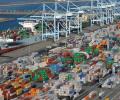
India's latest trade data reveals a significant geographical realignment, with trade surpluses growing decisively with Asian and African nations, even as surpluses with traditional partners like the US and Netherlands narrow.

We cannot simply have a 60-65 per cent import dependency in LPG, the bulk of which comes from just one volatile region -- West Asia, points out R Jagannathan.

Foreign Portfolio Investors (FPIs) have withdrawn Rs 14,231 crore from Indian equities so far in May, extending the total outflow for 2026 to over Rs 2 lakh crore, driven by persistent global macroeconomic uncertainties including inflation, interest rates, and geopolitical risks.

The broader conflict in West Asia, the largest international market for Indian carriers, has forced a sharp reduction in daily flights relative to the summer schedule.
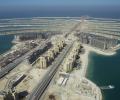
Ongoing geopolitical tensions in West Asia have slowed deal momentum in Dubai's luxury residential market, but Indian high-net-worth individuals (HNIs) are not exiting their marquee assets, with any 'discounted' resale deals attributed to investor liquidity stress rather than geopolitical flight.

Indian benchmark equity indices, Sensex and Nifty, opened higher, tracking positive global trends and easing crude oil prices, fueled by hopes of a swift resolution to the West Asia conflict. Track Nifty 50 and BSE Sensex performance and key global triggers.

Indian benchmark indices Sensex and Nifty experienced a significant slump in early trade, mirroring a sharp decline in global equities and a fresh spike in crude oil prices, exacerbated by simmering tensions in West Asia and a global unwinding of the AI-led rally. Track how sensex, Nifty fared on June 8.

The International Monetary Fund (IMF) has reduced India's growth forecast for FY27 to 6.4 per cent, citing the potential impact of higher energy prices offsetting the country's economic resilience. Despite this, India remains among the fastest-growing major economies.

Indian benchmark equity indices Sensex and Nifty experienced a significant crash in early trade, triggered by a sharp increase in crude oil prices and escalating tensions in the Middle East.

India's retail inflation marginally increased to 3.4 per cent in March, up from 3.21 per cent in February, primarily due to an uptick in certain food items and the initial impact of the West Asia crisis on fuel prices, according to government data.

At 31, it would be too early and unwise to phase out a special talent like Sanju Samson, who despite the odd blip appears to be enjoying the best phase of his India career.

The article delves into the growing friction between Indian cricket captain Rohit Sharma and the selection committee head Ajit Agarkar, along with head coach Gautam Gambhir. It highlights a lack of mutual trust and differing visions for the team's future, particularly concerning Rohit's role and the integration of new talent like Yashasvi Jaiswal. The piece draws parallels to past cricketing controversies and suggests a potential end to Rohit's captaincy.

Economist Jeffrey Sachs saw Gulf nations' decision to partner with the US through the Abraham Accords as an "invitation for disaster" as it made them more dependent on American protection.

The government is identifying households with both liquefied petroleum gas (LPG) and piped natural gas (PNG) connections to enforce a ban on dual ownership, aiming to curb misuse and better target subsidies amid global energy supply disruptions.
Indian benchmark equity indices experienced a significant downturn, with the Sensex plummeting over 800 points and the Nifty falling sharply, driven by rising crude oil prices, geopolitical tensions, and foreign capital outflows.

Prime Minister Narendra Modi has appealed to citizens to adopt austerity measures, including avoiding destination weddings abroad and reducing edible oil consumption, to mitigate the impact of the West Asia crisis on India's economy.
Indian equities on Dalal Street saw volatility as global market trends and fresh tariff concerns linked to Donald Trump impacted investor sentiment. Track Sensex, Nifty50 movement and key market drivers for April 2, 2026.

Bangkok is a fast, 24-hour megapolis, full of joie de vivre and buoyance that you will be instantly smitten, like I was.
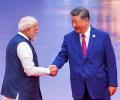
India's dual pursuit of a robust strategic partnership with Washington and a pragmatic, tension-management policy with Beijing represents the essence of modern multi-alignment. By embracing economic pragmatism, learning to compartmentalize political differences, and engaging in continuous dialogue, India can secure its borders, grow its economy, and contribute to a stable, multipolar Asian century, points out Ambassador Rajasekhar.

Prime Minister Narendra Modi and Indonesian President Prabowo Subianto have significantly advanced the India-Indonesia Comprehensive Strategic Partnership, securing crucial agreements on defence, critical minerals, and maritime security, including BrahMos missile supply and Sabang port development.

India's football faces a setback as it receives only one play-off slot for the 2027-28 AFC Challenge League, the third tier of Asia's club structure, due to administrative issues and declining performance.
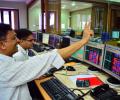
Indian benchmark indices Sensex and Nifty surged significantly in early trade, mirroring a global rally and a sharp decline in crude oil prices following the finalisation of a peace deal between the US and Iran to end their 107-day conflict and reopen the Strait of Hormuz.

The 2026 FIFA World Cup, co-hosted by the United States, Mexico, and Canada, is set to be football's largest tournament but will unfold against a backdrop of significant geopolitical tensions, including conflicts, strained alliances, and complex immigration policies, challenging its traditional role as a symbol of global unity.

Indian markets on Dalal Street rallied sharply as easing tensions in the US-Iran conflict and stable oil prices boosted sentiment. Track Nifty 50 and BSE Sensex performance and key global triggers.

The United States' historical strategic alignment with Pakistan, dating back to the Cold War, has consistently aimed to create a political and military parity with India, despite India's significantly larger size and resources. This long-standing relationship continues to influence regional dynamics, particularly in West Asia and the Indo-Pacific.

The Indian rupee fell to a record low against the US dollar due to rising crude oil prices, foreign institutional investor selling, and weak domestic equity market sentiment.

Indian benchmark indices Sensex and Nifty closed lower for the second consecutive day, driven by investor caution over conflicting geopolitical signals from West Asia and fresh foreign institutional investor (FII) outflows.

Airfares to Southeast Asia have surged 25 to 30 per cent, driven by high demand and limited airline seat capacity.

Japan showed their battling qualities to eke out a 2-2 draw with the Netherlands in their World Cup Group F opener on Sunday, as Hajime Moriyasu's side backed up their desire to make an impact at the tournament with a gritty display.
Indian equity markets experienced a significant decline in early trade, with the BSE Sensex and NSE Nifty dropping, as escalating geopolitical tensions in West Asia and a surge in global oil prices dampened investor sentiment. Track Sensex, Nifty50 movement and key market drivers for May 8, 2026.
